

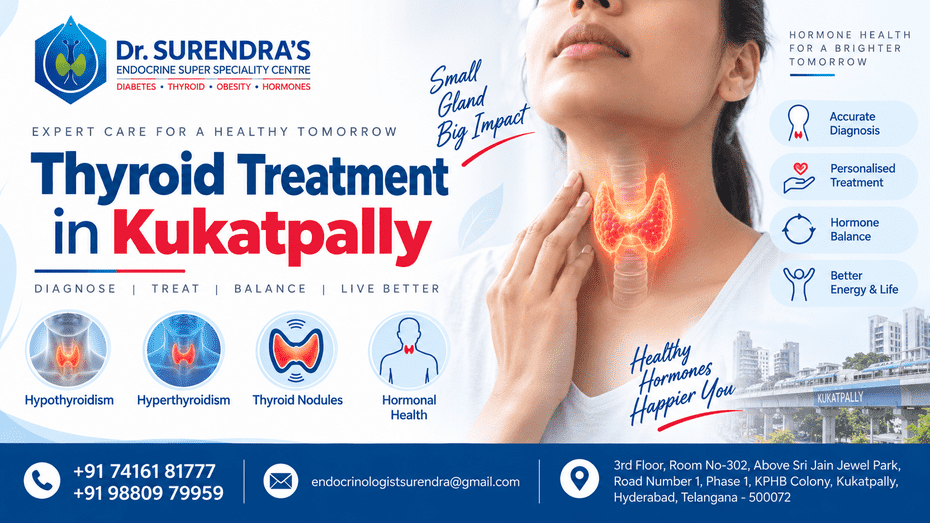
Thyroid treatment in Kukatpally involves comprehensive endocrine evaluation, precise TSH and thyroid hormone panel testing, high-resolution ultrasound screening for nodules or goiter, and individualized hormone replacement or antithyroid therapy. Specialist care ensures optimal metabolic balance, relief from fatigue and weight changes, safe management during pregnancy, and regular long-term medication monitoring under an experienced DM Endocrinologist.
What Is Thyroid Treatment?
The thyroid gland is a butterfly-shaped endocrine organ situated at the front base of the neck. Under the regulatory control of Thyroid-Stimulating Hormone (TSH) produced by the pituitary gland, the thyroid synthesizes thyroxine (T4) and triiodothyronine (T3). These hormones govern your basal metabolic rate, body temperature regulation, heart rhythm, cellular energy production, and cognitive function.
When hormone synthesis becomes deficient (hypothyroidism) or excessive (hyperthyroidism), or when structural abnormalities such as goiter or thyroid nodules arise, comprehensive Thyroid Disorders Treatment becomes necessary. Under the clinical guidance of Dr. Surendra Prasad Guntupalli, thyroid care combines advanced diagnostic laboratory panels, high-resolution ultrasonography, personalized medical therapy, and structured follow-up monitoring.
- Restores circulating free thyroxine (FT4) and TSH levels within individualized physiological ranges
- Alleviates fatigue, unexplained weight changes, brain fog, and cold or heat sensitivity
- Protects cardiovascular function, lipid metabolism, and bone mineral density from hormonal strain
- Provides dedicated risk stratification for thyroid enlargement, solitary nodules, and multinodular goiter
- Ensures safe hormonal support during preconception planning, pregnancy, and the postpartum period
When Do You Need Thyroid Treatment?
In Kukatpally and KPHB, many patients consult an endocrinologist after an incidental blood checkup reveals an abnormal TSH level, or because they experience persistent, unexplained exhaustion that does not resolve with rest.
Thyroid evaluation is specifically indicated if you experience symptoms of an underactive thyroid (hypothyroidism) or an overactive thyroid (hyperthyroidism), or if you notice a visible swelling or fullness at the base of your neck.
- Elevated TSH on laboratory testing, indicating an underactive thyroid (hypothyroidism or subclinical hypothyroidism)
- Suppressed or low TSH on laboratory testing, indicating thyroid hormone excess (hyperthyroidism or thyrotoxicosis)
- Persistent fatigue, unexplained weight gain despite normal food intake, dry skin, hair loss, and cold intolerance
- Rapid heartbeats (palpitations), unexpected weight loss, hand tremors, nervous anxiety, and heat intolerance
- Visible or palpable neck enlargement, thyroid swelling (goiter), or a distinct neck lump/nodule
- Menstrual cycle irregularities, heavy periods, or difficulty conceiving related to hormonal imbalance
- Pregnancy planning or newly confirmed pregnancy with abnormal thyroid values or positive thyroid antibodies
How Is a Thyroid Disorder Diagnosed?
At Dr. Surendra Endocrine Super Speciality Centre in KPHB Colony, Kukatpally, diagnostic evaluation begins with a detailed patient history and physical examination. Dr. Surendra palpates the neck to assess thyroid gland dimensions, firmness, symmetry, tenderness, and mobility during swallowing, while also checking heart rate, blood pressure, skin texture, and deep tendon reflexes.
Targeted laboratory testing and imaging are then tailored to the clinical picture to establish the underlying etiology and guide safe therapy.
- Serum TSH (Thyroid-Stimulating Hormone): The primary, sensitive screening marker for pituitary-thyroid feedback
- Free T4 and Free T3: Active, unbound circulating hormones that reflect actual cellular thyroid hormone availability
- Anti-TPO (Thyroid Peroxidase) & Anti-Tg (Thyroglobulin) Antibodies: Markers identifying autoimmune thyroiditis such as Hashimoto's disease
- TSH Receptor Antibodies (TRAb): Specific blood test to confirm Graves' disease in patients with hyperthyroidism
- High-Resolution Neck Ultrasonography: Accurately evaluates thyroid gland texture, volume, nodule dimensions, vascularity, and TIRADS risk category
- Ultrasound-Guided FNAC (Fine Needle Aspiration Cytology): Performed when nodules meet specific size or suspicious ultrasound criteria
Thyroid Treatment for Hypothyroidism
The cornerstone of Thyroid Treatment in Kukatpally for hypothyroidism is oral levothyroxine sodium replacement therapy. Levothyroxine is a pure, bioidentical synthetic hormone that exactly mirrors the natural thyroxine (T4) produced by the human body. Once absorbed, it is converted into active T3 in peripheral tissues, restoring normal cellular metabolism.
Correct medication administration is vital for consistent therapeutic absorption. Levothyroxine must be taken first thing in the morning on an empty stomach with a full glass of plain water, waiting at least 45 to 60 minutes before consuming tea, coffee, breakfast, or other medications. Calcium supplements, iron tablets, antacids, and multivitamin preparations containing biotin must be spaced at least 4 hours apart to prevent drug binding in the digestive tract.
- Precision dosing: Calibrated based on patient body weight, age, cardiovascular health, and baseline TSH levels
- Empty-stomach adherence: Taken with water 45–60 minutes before morning tea, coffee, milk, or breakfast
- Supplement separation: Keeping calcium, iron, and antacids separated by at least 4 hours from thyroid medication
- Individualized titration: Follow-up testing every 6 to 8 weeks until target TSH and symptom resolution are achieved
- Avoidance of arbitrary brand switching: Consistent formulation ensures steady blood hormone concentrations
Thyroid Treatment for Hyperthyroidism
Uncontrolled hyperthyroidism poses significant health risks, including cardiac arrhythmias (such as atrial fibrillation), congestive heart failure, bone mineral loss (osteoporosis), and severe muscle weakness. Timely management by an experienced Thyroid Specialist in KPHB is critical to bring hormone levels into safe limits.
Therapeutic modalities are selected according to the underlying cause, patient age, severity of thyrotoxicosis, goiter size, and pregnancy status.
- Antithyroid Medications (Carbimazole / Methimazole): First-line drugs that inhibit thyroid hormone synthesis, carefully titrated under medical supervision
- Propylthiouracil (PTU): Specialized antithyroid drug preferred during the first trimester of pregnancy or thyroid storm
- Beta-Blockers (such as Propranolol): Provide rapid relief from distressing tremors, rapid heart rates, anxiety, and heat intolerance while antithyroid drugs take effect
- Radioactive Iodine (RAI) Therapy: A safe, definitive oral treatment that selectively ablates overactive thyroid tissue in suitable adult patients
- Surgical Thyroidectomy: Considered for large compressive goiters, suspicious nodules, or when medical and radioiodine therapies are contraindicated
Thyroid Nodule and Thyroid Swelling Evaluation
Specialist endocrine evaluation is essential to distinguish benign nodules requiring periodic observation from the small fraction of suspicious nodules requiring tissue biopsy or surgical resection. High-resolution ultrasound imaging with American College of Radiology (ACR) TIRADS scoring provides precise risk stratification based on nodule composition, echogenicity, shape, margins, and microcalcifications.
When a nodule meets specific international guideline criteria (such as suspicious ultrasound features or size exceeding 1 to 1.5 cm), an ultrasound-guided Fine Needle Aspiration Cytology (FNAC) is performed. FNAC is a quick, minimally invasive outpatient procedure that extracts cellular samples for microscopic evaluation, providing diagnostic certainty without surgery.
- High-Resolution Ultrasonography: Detailed mapping of nodule size, location, vascularity, and internal composition
- ACR TIRADS Risk Classification: Standardized grading system to determine whether a nodule needs biopsy or monitoring
- Ultrasound-Guided FNAC: Safe, outpatient micro-needle cellular sampling for definitive cytological assessment
- Conservative Watchful Waiting: Routine 6- to 12-month ultrasound surveillance for benign, asymptomatic nodules
- Pressure Symptom Assessment: Evaluating any difficulty swallowing (dysphagia), voice hoarseness, or breathing discomfort
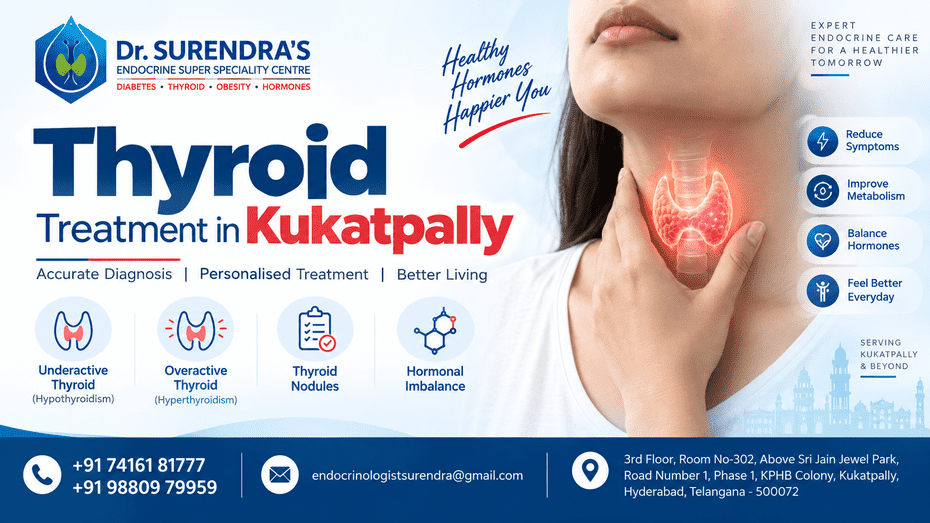
Specialist clinical evaluation for hypothyroidism, hyperthyroidism, thyroid nodules, and hormone balance in KPHB Kukatpally.
Thyroid Treatment During Pregnancy
Untreated or inadequately managed hypothyroidism during pregnancy increases risks of early miscarriage, gestational hypertension, preeclampsia, placental abruption, low birth weight, and impaired neurocognitive development in the child. Similarly, uncontrolled hyperthyroidism can precipitate maternal heart failure, preterm labor, and fetal growth restriction.
At Dr. Surendra Endocrine Super Speciality Centre in KPHB Colony, pregnancy thyroid care follows strict international Endocrine Society and Indian Thyroid Society protocols. For women planning pregnancy, TSH is ideally optimized below 2.5 mIU/L. Upon confirmation of pregnancy, women on levothyroxine frequently require an immediate 25% to 30% dose increase under endocrine guidance, with repeat blood testing conducted every 4 weeks during early gestation.
- Preconception Optimization: Achieving target TSH below 2.5 mIU/L for women planning to conceive
- Immediate Dose Adjustment: Levothyroxine dose is usually adjusted promptly upon pregnancy confirmation
- Trimester-Specific TSH Monitoring: Venous blood tests every 4 weeks during the first half of pregnancy
- Anti-TPO Antibody Screening: Identifying autoimmune thyroiditis to anticipate hormonal fluctuations
- Postpartum Thyroiditis Surveillance: Monitoring for transient thyrotoxicosis followed by hypothyroidism within 12 months after delivery
Thyroid Medication Monitoring
When starting levothyroxine or adjusting your dose, it takes approximately 6 to 8 weeks for circulating hormone levels to achieve a steady biochemical state in the bloodstream. Testing TSH too early can lead to premature, inappropriate dose changes.
A common mistake made by patients is stopping medication once their TSH report returns within normal limits. It is crucial to understand that your TSH report is normal precisely because the prescribed medication is replacing the missing hormone. Discontinuing treatment causes hormone levels to drop again, triggering a relapse of fatigue, weight gain, and metabolic sluggishness.
- Initial Dose Titration: Serum TSH checked every 6 to 8 weeks following any medication change until stable
- Maintenance Surveillance: Routine TSH and Free T4 monitoring every 6 to 12 months once euthyroid state is confirmed
- Never Stop Medication Abruptly: Normal test numbers indicate medication success, not a signal to discontinue therapy
- Monitor for Over-Replacement: Excessive dosage can trigger palpitations, sleep disturbance, irritability, and bone loss
- Review Drug Interactions: Spacing medications that hinder absorption (iron, calcium, antacids, PPIs, multivitamins)
How Long Does Thyroid Treatment Take?
Following the initiation of levothyroxine for hypothyroidism, most patients begin noticing improvements in energy levels and mental alertness within 2 to 4 weeks. However, complete resolution of dry skin, hair shedding, fluid retention, and metabolic stabilization generally takes 6 to 12 weeks of consistent daily medication.
Regarding overall duration: primary autoimmune hypothyroidism (Hashimoto's thyroiditis) typically requires lifelong daily hormone replacement because the thyroid tissue cannot regenerate lost secretory capacity. In contrast, temporary conditions such as subacute viral thyroiditis, drug-induced thyroiditis, or transient postpartum thyroiditis often resolve within several months, allowing supervised medication tapering.
- Early Symptomatic Relief: Improved energy, reduced brain fog, and better sleep usually emerge within 2 to 4 weeks
- Full Metabolic Normalization: Cellular hormone balance, skin texture recovery, and stable TSH take 6 to 12 weeks
- Chronic Hypothyroidism: Most cases of autoimmune hypothyroidism require lifelong daily hormone substitution
- Transient Thyroiditis: Viral or postpartum thyroiditis often resolves spontaneously over 3 to 9 months
- Hyperthyroidism Antithyroid Course: Medical therapy with antithyroid tablets is typically continued for 12 to 18 months before assessing remission
When Should You See an Endocrinologist?
While routine thyroid tests can be ordered by general physicians, consulting an experienced Endocrinologist for Thyroid in KPHB provides critical diagnostic depth, particularly when laboratory results are complex or symptoms persist despite standard prescriptions.
Specialist endocrine consultation prevents misdiagnosis, eliminates unnecessary surgeries for benign nodules, and ensures tailored hormonal harmony.
- Persistent symptoms such as exhaustion, weight gain, or mood changes despite 'normal' lab reports
- Fluctuating or erratic TSH levels that remain difficult to stabilize on standard medication doses
- Discovery of a palpable neck lump, visible goiter, or thyroid nodules requiring ultrasound risk stratification
- Pregnancy planning, active pregnancy, or difficulty conceiving with abnormal thyroid parameters
- Diagnosis of hyperthyroidism, Graves' disease, or thyroid-related eye symptoms (bulging, redness, double vision)
- Co-existing endocrine conditions such as Diabetes Mellitus, PCOS, hyperlipidemia, or osteoporosis
- Family history of thyroid cancer or previous neck radiation therapy
What to Bring to a Thyroid Consultation
Before visiting Dr. Surendra Endocrine Super Speciality Centre in KPHB Colony, Kukatpally, assemble your medical records chronologically. Prior blood test results, even from several years ago, help your endocrinologist identify whether your thyroid condition has been progressive, fluctuating, or stable.
If you are currently taking thyroid medication, bring the exact strip or write down the precise brand and dosage (in micrograms) you take each morning.
- All previous laboratory blood reports: TSH, Free T3, Free T4, Anti-TPO antibodies, lipid profile, CBC
- Neck Ultrasound reports and original scan images/films if an imaging examination was previously conducted
- Previous FNAC cytology reports or biopsy findings if any thyroid nodule sampling was performed
- Complete medication list: Exact brand names, daily dosages, and schedule of all prescription medications and supplements
- List of over-the-counter supplements: Multivitamins, hair/skin supplements (particularly those containing Biotin), calcium, iron
- Written notes on your symptoms: Duration of fatigue, weight changes, menstrual irregularities, or family history of thyroid disorders
Thyroid Treatment in Kukatpally: What to Expect
Dr. Surendra Prasad Guntupalli (MD, DM Endocrinology) is a highly accomplished Senior Consultant Endocrinologist with extensive experience in diagnosing and managing the full spectrum of thyroid and endocrine disorders. Located conveniently in Phase 1 of KPHB Colony, Kukatpally, our clinic serves patients from KPHB, Kukatpally, Miyapur, Nizampet, JNTU, Pragathi Nagar, and greater Hyderabad.
During your consultation, you can expect an unhurried, thorough evaluation: detailed symptom review, dedicated physical examination of the thyroid gland, clear interpretation of diagnostic reports, and an individualized treatment protocol tailored to your daily lifestyle. For broader patient education and endocrine health tips, visit our official Instagram and YouTube channels.
- Super-Specialist DM Endocrinology Expertise: Focused clinical training in thyroid, hormone, and metabolic medicine
- Comprehensive Neck Evaluation: In-clinic physical palpation and advanced diagnostic risk stratification
- Personalized Treatment Protocols: Evidence-based medication selection tailored to age, organ safety, and lifestyle
- Patient-Friendly Central Location: Road No. 1, Phase 1, KPHB Colony with dedicated elevator access
- Dedicated Follow-up Scheduling: Structured timelines for repeat testing and long-term hormonal wellness
Book Thyroid Treatment in Kukatpally
Our clinic in KPHB Colony Phase 1 is easily accessible by road and metro for residents across Kukatpally, KPHB, Miyapur, Nizampet, Hitec City, and surrounding areas of Hyderabad.
Visit our Contact Dr. Surendra page to schedule your consultation online, or reach out to our clinic desk directly via phone or WhatsApp. We look forward to guiding you toward sustained endocrine health.
- Clinic Address: 3rd Floor, Room 302, Above Sri Jain Jewel Park, Road No. 1, Phase 1, KPHB Colony, Kukatpally, Hyderabad, Telangana 500072
- Consultation Timings: Monday to Saturday: 10:00 AM – 2:00 PM & 5:00 PM – 8:30 PM
- Direct Phone: +91 74161 81777 / +91 98809 79959
- Appointments: Online consultation booking, direct clinic calling desk, and WhatsApp support
Medical Education Disclaimer
This article is for patient education only and does not replace a physical consultation with a qualified doctor. Hormone regimens, blood sugar targets, and thyroid medications must be individually calibrated by an endocrinologist after proper laboratory diagnostic evaluation.
Medical References & Clinical Guidelines
- American Thyroid Association (ATA) Guidelines for Diagnosis and Management of Hyperthyroidism and Other Causes of Thyrotoxicosis.
- Clinical Practice Guidelines for Hypothyroidism in Adults: Cosponsored by the American Association of Clinical Endocrinologists (AACE) and the American Thyroid Association (ATA).
- Revised American Thyroid Association Management Guidelines for Adult Patients with Thyroid Nodules and Differentiated Thyroid Cancer.
- Endocrine Society Clinical Practice Guidelines: Management of Thyroid Dysfunction during Pregnancy and Postpartum.
- Indian Thyroid Society (ITS) National Guidelines on Management of Thyroid Disorders and Gestational Hypothyroidism.
Frequently Asked Questions
You can receive specialized thyroid treatment at Dr. Surendra Endocrine Super Speciality Center, located on the 3rd Floor, Room 302, above Sri Jain Jewel Park, Road Number 1, Phase 1, KPHB Colony, Kukatpally, Hyderabad. Dr. Surendra Prasad Guntupalli (MD, DM Endocrinology) provides dedicated clinical care for hypothyroidism, hyperthyroidism, Hashimoto’s thyroiditis, goiter, and thyroid nodules.
Need Specialist Advice?
Consult Dr. Surendra Prasad Guntupalli for personalized endocrine, thyroid, and hormone-related health concerns in KPHB Colony, Kukatpally.