

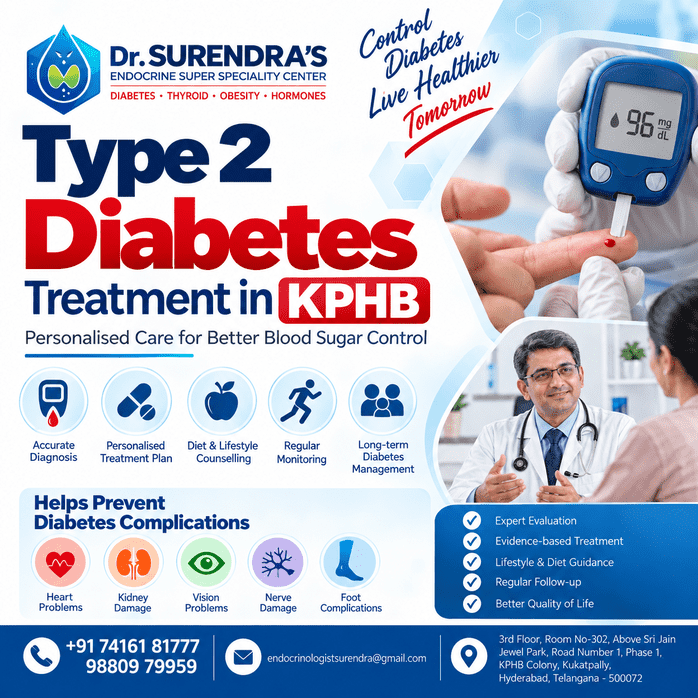
Type 2 diabetes treatment in KPHB at Dr. Surendra’s Endocrine Center focuses on personalized blood sugar management, structured HbA1c monitoring, organ-protective medication strategies, and sustainable lifestyle guidance. Led by Dr. Surendra Prasad Guntupalli, MD, DM (Endocrinology), super-specialist care combines clinical evaluation, early complication screening, and continuous therapy titration to achieve long-term glycemic control for patients across KPHB, Kukatpally, and Hyderabad.
What Is Type 2 Diabetes?
Unlike Type 1 diabetes, which is an autoimmune disorder that causes absolute insulin deficiency, Type 2 diabetes develops progressively over years and is closely associated with genetic predisposition, excess visceral fat, physical inactivity, and metabolic syndrome.
For individuals seeking specialized Type 2 Diabetes Treatment, clinical management at Dr. Surendra’s Endocrine Center in KPHB Colony, Kukatpally, focuses on restoring glycemic balance, protecting remaining pancreatic beta-cell reserve, and shielding vital organs from the vascular consequences of chronic hyperglycemia.
- Progressive cellular insulin resistance combined with relative insulin secretory defect
- Strongly influenced by family genetics, sedentary lifestyle, and central abdominal fat
- Causes sustained elevation in both fasting and post-meal plasma glucose concentrations
- Differentiated from Type 1 diabetes through clinical presentation, age of onset, and autoimmune antibody testing
- Highly manageable through early diagnosis, personalized medical therapy, and structured lifestyle guidance
When Should You Seek Type 2 Diabetes Treatment?
If you or a family member in KPHB or Kukatpally notice persistent signs of high blood sugar, seeking timely Diabetes Mellitus Treatment is essential. Delaying medical consultation allows silent microvascular damage to progress unnoticed, increasing long-term risks to the kidneys, eyes, and nervous system.
Early consultation with a specialist allows timely reversal of acute glucotoxicity, stabilizes blood sugar levels, and prevents avoidable acute and chronic complications.
- Increased thirst (polydipsia) and frequent urination (polyuria), especially disrupting sleep at night
- Unexplained physical fatigue, daytime drowsiness, and reduced daily stamina
- Unintentional weight loss despite maintaining a normal or increased appetite
- Blurred vision or difficulty focusing caused by osmotic fluid shifts in the eye lens
- Slow-healing cuts, recurrent skin infections, boils, or frequent urinary tract infections
- Tingling, burning, or numbness in the toes and feet (early signs of peripheral neuropathy)
- Dark velvety patches of skin around the neck, armpits, or knuckles (acanthosis nigricans, indicating insulin resistance)
- Family history of diabetes combined with high-stress desk routines or sedentary lifestyle
How Is Type 2 Diabetes Diagnosed?
At Dr. Surendra’s Endocrine Super Speciality Center in KPHB, diagnostic results are evaluated alongside your medical history, metabolic risk factors, and cardiovascular baseline.
Fasting Plasma Glucose
The Fasting Plasma Glucose (FPG) test measures blood glucose after an overnight fast of at least 8 to 10 hours during which only plain water is permitted.
A fasting plasma glucose reading of 126 mg/dL (7.0 mmol/L) or greater on two separate occasions confirms the diagnosis of diabetes. Readings between 100 mg/dL and 125 mg/dL indicate impaired fasting glucose (prediabetes), which warrants immediate preventive lifestyle intervention.
- Normal fasting glucose: Below 100 mg/dL
- Prediabetes (impaired fasting glucose): 100 mg/dL to 125 mg/dL
- Diagnostic threshold for diabetes: 126 mg/dL or higher
HbA1c Test
The Glycated Hemoglobin (HbA1c) test reflects your average blood glucose levels over the preceding 2 to 3 months by measuring the percentage of hemoglobin in red blood cells bound to glucose.
An HbA1c value of 6.5% (48 mmol/mol) or higher on a certified laboratory assay confirms diabetes mellitus. Because HbA1c does not require fasting, it provides an objective, reliable measure of long-term glycemic exposure free from day-to-day fluctuations.
- Normal HbA1c level: Below 5.7%
- Prediabetes range: 5.7% to 6.4%
- Diagnostic threshold for diabetes: 6.5% or greater
- Reflects 90-day cumulative glucose exposure for therapy evaluation
Post-Meal or Random Blood Glucose
Postprandial blood glucose measures circulating sugar exactly 2 hours after a standard meal or during a standardized 75-gram Oral Glucose Tolerance Test (OGTT), showing how effectively the body handles carbohydrate intake.
A 2-hour post-meal or OGTT plasma glucose of 200 mg/dL (11.1 mmol/L) or higher confirms diabetes. Additionally, a random blood glucose reading of 200 mg/dL or higher in the presence of classic hyperglycemic symptoms (such as extreme thirst, frequent urination, and weight loss) confirms diabetes without requiring repeat testing.
- Normal 2-hour post-meal glucose: Below 140 mg/dL
- Impaired glucose tolerance (prediabetes): 140 mg/dL to 199 mg/dL
- Diagnostic for diabetes: 200 mg/dL or greater
- Random glucose >= 200 mg/dL with classic symptoms confirms diagnosis immediately
How Is Type 2 Diabetes Treatment Planned?
When designing a treatment plan, a Diabetes Specialist in KPHB evaluates multiple clinical dimensions rather than simply escalating medication doses to force blood sugar down. The clinical objective is to maintain safe glycemic targets while avoiding hypoglycemia, minimizing weight gain, and protecting cardiovascular and renal function.
At Dr. Surendra’s Endocrine Center, treatment plans integrate medical nutrition therapy, structured physical activity, organ-protective pharmacotherapy, self-monitoring routines, and continuous follow-up care.
- Baseline HbA1c, fasting glucose, and postprandial glucose excursions
- Duration of diabetes and degree of remaining beta-cell secretory function
- Presence of co-existing conditions, including hypertension, dyslipidemia, and fatty liver
- Kidney function status (serum creatinine, eGFR, and urine microalbumin levels)
- Body mass index (BMI) and degree of visceral or abdominal adiposity
- Hypoglycemia risk profile, especially in elderly patients or active vehicle drivers
- Occupational routine, meal timings, and personal lifestyle preferences
Type 2 Diabetes Medicines and Treatment Adjustment
Understanding how different medication classes work helps patients make informed decisions and adhere to treatment. However, all therapeutic choices must be personalized by an endocrinologist following thorough clinical assessment.
Important Medical Guidance: The overview below is strictly educational. Medication selection, dosing, and combinations depend on individual kidney function, liver health, cardiac status, and glycemic goals. Do not start, stop, or change a diabetes medicine without medical advice.
- **Metformin**: The foundational, globally recommended first-line biguanide. It lowers blood sugar by reducing hepatic glucose production, enhancing muscle insulin sensitivity, and supporting weight neutrality without causing hypoglycemia.
- **SGLT2 Inhibitors (Gliflozins)**: An innovative oral class that blocks glucose reabsorption in the proximal renal tubules, allowing excess sugar and calories to be excreted harmlessly in urine. SGLT2 inhibitors provide robust cardiovascular protection, lower heart failure risk, and slow chronic kidney disease progression.
- **GLP-1 Receptor Agonists (Incretin Mimetics)**: Medications that mimic natural gut GLP-1 hormones, stimulating insulin release in a glucose-dependent manner (acting only when glucose is elevated), slowing stomach emptying, reducing glucagon secretion, and curbing appetite to aid metabolic control.
- **DPP-4 Inhibitors (Gliptins)**: Oral tablets that inhibit the enzyme DPP-4, thereby prolonging the active lifespan of natural incretins. They stimulate post-meal insulin release and reduce glucagon without causing weight gain or low blood sugar.
- **Other Glucose-Lowering Medicines**: Including sulfonylureas (which stimulate the pancreas to release more insulin), thiazolidinediones (pioglitazone, which enhances cellular insulin sensitivity), and alpha-glucosidase inhibitors (which slow carbohydrate absorption in the intestines).
- **Insulin**: The body's vital physiological hormone, utilized either temporarily or long term to supplement or replace deficient endogenous production when oral agents cannot achieve safe targets.
- **Treatment Adjustment**: Because diabetes is a progressive metabolic condition, medication needs change over time. If follow-up blood tests or HbA1c levels show suboptimal control, an endocrinologist will adjust dosages or introduce synergistic drug combinations to maintain organ safety.
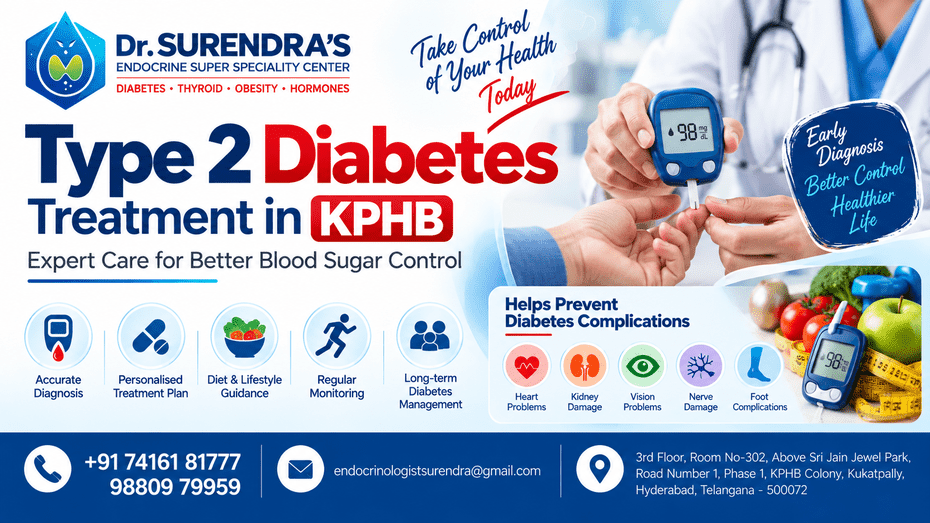
Clinical blood glucose monitoring, personalized medical care, and healthy lifestyle guidance for Type 2 diabetes management in KPHB.
When Is Insulin Required for Type 2 Diabetes?
Insulin therapy may be initiated either temporarily or permanently depending on clinical circumstances. In newly diagnosed patients with severe hyperglycemia (such as HbA1c exceeding 10% or blood sugars over 300 mg/dL), short-term insulin therapy rapidly resolves glucotoxicity and allows pancreatic beta cells to recover, after which oral medications can often be resumed.
At Dr. Surendra’s Endocrine Center, patients receive comprehensive, patient-friendly guidance on modern painless micro-needles, insulin pen devices, bedtime basal titration, and hypoglycemia prevention protocols.
- Severe initial hyperglycemia accompanied by catabolic symptoms (rapid weight loss, intense thirst, and fatigue)
- Failure of multi-drug oral and non-insulin therapies to maintain HbA1c within target ranges
- Advanced chronic kidney disease or liver impairment where oral medications are restricted or contraindicated
- Acute medical illness, severe infections, cardiovascular events, or major surgical procedures
- Pre-conception planning or pregnancy in women with Type 2 diabetes where strict glycemic targets are critical
- Transitioning to modern long-acting basal insulin analogues that provide 24-hour stability with minimal risk of hypoglycemia
The Role of HbA1c Monitoring
Clinical research conclusively demonstrates that every 1% reduction in HbA1c lowers the risk of microvascular complications—such as diabetic eye disease and diabetic kidney disease—by up to 35% to 40%. Monitoring HbA1c provides objective evidence on how effectively medications and lifestyle habits are working.
During active medication titration or therapy changes, an endocrinologist typically recommends repeating HbA1c every 3 months. Once blood glucose levels stabilize within target parameters, testing every 3 to 6 months ensures ongoing safety and peace of mind.
- Standard adult target: HbA1c below 7.0% (53 mmol/mol) for most non-pregnant adults
- Stringent target (< 6.5%): Appropriate for newly diagnosed individuals, younger patients, and those without heart disease
- Relaxed target (< 7.5% to 8.0%): Individualized for elderly patients, those with advanced complications, or history of severe hypoglycemia
- Paired with Self-Monitoring of Blood Glucose (SMBG) to track pre-meal, post-meal, and nocturnal patterns
- Continuous Glucose Monitoring (CGM) sensor technology available for patients needing detailed glycemic variability insight
Diet and Lifestyle for Type 2 Diabetes
At Dr. Surendra’s Endocrine Center, lifestyle plans are tailored to South Indian dietary traditions, ensuring realistic, culturally relevant, and sustainable metabolic improvements.
Balanced Nutrition
Dietary management for Type 2 diabetes focuses on controlling carbohydrate quality and glycemic load. Choosing complex, unrefined carbohydrates—such as foxtail millets, whole wheat, brown rice, oats, and pulses—prevents sharp post-meal blood sugar surges.
Each meal should balance complex carbohydrates with adequate lean protein (dal, paneer, eggs, tofu, fish, or chicken) and high dietary fiber from seasonal vegetables and leafy greens. Eliminating sugar-sweetened beverages, commercial fruit juices, bakery confectionery, and ultra-processed snacks significantly stabilizes daily blood sugar.
- Prioritize whole grains, millets, and legumes over polished white rice and refined maida
- Fill half your plate with non-starchy, fiber-rich vegetables and fresh salads at lunch and dinner
- Maintain consistent meal timings and avoid skipping meals or excessive late-night dining
- Replace sugary beverages and sweets with water, buttermilk, or unsweetened green tea
Physical Activity
Contracting skeletal muscles utilize circulating blood glucose independently of insulin through GLUT4 glucose transporter translocation. This means regular exercise directly lowers blood sugar and boosts cellular insulin sensitivity for up to 24 to 48 hours following a workout.
Adults with Type 2 diabetes should aim for at least 150 minutes of moderate-intensity aerobic exercise per week, such as brisk walking, cycling, or swimming. Combining aerobic exercise with 2 to 3 weekly resistance training sessions (bodyweight exercises, resistance bands, or light weights) preserves metabolically active muscle mass.
- Engage in at least 30 minutes of brisk walking 5 days per week
- Incorporate progressive strength or resistance training twice weekly to enhance glucose disposal
- Break up continuous sitting with 2 to 3 minutes of light walking every 30 to 45 minutes
- A 10- to 15-minute gentle walk immediately after meals significantly blunts postprandial glucose spikes
Sleep and Daily Routine
Chronic sleep deprivation and irregular sleep patterns disrupt the body's circadian rhythms, triggering elevated morning cortisol and adrenaline levels that stimulate liver glucose production and induce acute insulin resistance.
Aim for 7 to 8 hours of restful, uninterrupted sleep every night. Managing chronic psychological stress through meditation, deep breathing exercises, or outdoor hobbies prevents stress-hormone-driven blood sugar spikes.
- Maintain consistent sleep and wake timings throughout the week
- Avoid heavy meals, caffeine, and screen exposure within 1 to 2 hours of bedtime
- Screen for Obstructive Sleep Apnea (OSA) if loud snoring, nighttime gasping, or morning headaches occur
- Practice relaxation techniques to control stress-induced counter-regulatory hormone surges
Weight Management
Excess visceral fat—adipose tissue accumulated around the liver, pancreas, and abdominal organs—is the primary driver of insulin resistance in Type 2 diabetes. Losing even 5% to 10% of total body weight can dramatically improve glycemic parameters and reduce medication requirements.
For patients carrying excess weight alongside diabetes, our center provides integrated Obesity & Medical Weight Care. Supervised Weight Management under endocrine guidance addresses metabolic bottlenecks, supporting sustainable fat reduction while preserving muscle mass.
- Losing 5% to 10% of body weight substantially improves HbA1c and insulin sensitivity
- Reduces hepatic fat accumulation, improving fasting blood sugar regulation
- Improves blood pressure, lipid profiles, and cardiovascular risk markers
- Medically supervised weight care ensures safe caloric deficits without nutritional deficiencies
Screening for Diabetes Complications
A structured diabetes checkup at Dr. Surendra’s Endocrine Super Speciality Center includes comprehensive screening protocols designed to protect your vision, kidneys, nerves, heart, and feet.
- **Diabetic Retinopathy**: Annual dilated eye examination by an ophthalmologist to screen for retinal microaneurysms, hemorrhages, and macular edema before vision is impacted.
- **Diabetic Nephropathy**: Annual urine albumin-to-creatinine ratio (uACR) and serum creatinine testing (eGFR) to detect early microscopic protein leakage and start renal-protective therapy.
- **Diabetic Neuropathy**: Periodic monofilament and vibration testing to evaluate sensation in the feet and prevent neuropathic foot ulcers.
- **Cardiovascular Screening**: Lipid profile checks, blood pressure monitoring, and resting electrocardiograms (ECG) to protect against coronary artery disease and stroke.
- **Diabetic Foot Care**: Daily personal foot checks, professional foot examinations, and guidance on protective footwear to prevent non-healing wounds and infections.
When Should You Consult an Endocrinologist?
If your HbA1c remains elevated despite taking multiple medicines, or if you frequently experience frightening low blood sugar episodes (hypoglycemia), specialist evaluation is essential. An endocrinologist can evaluate your medication regimen, screen for hormonal interactions, and transition you to organ-protective therapies.
Patients from KPHB Colony, Kukatpally, and Hyderabad consult Dr. Surendra Prasad Guntupalli for evidence-based Diabetes Mellitus Treatment and long-term metabolic health preservation.
- HbA1c remains consistently above 7.0% despite taking two or more oral antidiabetic drugs
- Frequent or unexplained low blood sugar episodes (hypoglycemia: blood glucose < 70 mg/dL)
- High glycemic variability with unpredictable swings between fasting and post-meal readings
- Co-existing medical conditions such as kidney disease, heart failure, high cholesterol, or fatty liver
- Planning pregnancy or managing diabetes during gestation
- Need to initiate, adjust, or optimize insulin therapy safely with pen devices
- Evaluation for modern cardio-renal protective therapies (SGLT2 inhibitors or GLP-1 receptor agonists)
- Young-onset diabetes requiring differentiation between Type 1, Type 2, and monogenic (MODY) diabetes
Type 2 Diabetes Treatment in KPHB: What to Bring
Our clinic is conveniently located at 3rd Floor, Room No-302, Above Sri Jain Jewel Park, Road Number 1, Phase 1, KPHB Colony, Kukatpally, Hyderabad. Elevator access is available directly to our clinic reception on the third floor.
- Recent laboratory reports from the past 3 to 6 months (HbA1c, fasting & post-meal blood sugar, serum creatinine, urine microalbumin, lipid panel, and liver function tests)
- Your home glucometer log or continuous glucose monitoring (CGM) sensor reports showing pre- and post-meal readings
- All current doctor prescriptions, including exact names, dosages, and timings of diabetes, blood pressure, and cholesterol medicines
- Details of previous medication allergies or side effects you have experienced
- A brief summary of your usual daily diet, meal timings, physical activities, and work routine
Why Consider Specialist Diabetes Care in KPHB?
Under the clinical leadership of Dr. Surendra Prasad Guntupalli (MD, DM Endocrinology), our center provides specialized clinical endocrine care to patients residing in KPHB, Kukatpally, Miyapur, Nizampet, JNTU, and greater Hyderabad. We prioritize compassionate, evidence-based care that empowers patients to live healthy, complication-free lives.
You can also explore informative educational videos and health insights directly through our official YouTube Channel and follow daily endocrine updates on Instagram .
- Super-specialist care led by a Senior Consultant Endocrinologist, DM (Endocrinology)
- Comprehensive metabolic evaluations addressing blood sugar, lipids, blood pressure, and weight simultaneously
- Emphasis on organ-protective therapies that safeguard renal and cardiovascular function
- Clear, patient-friendly guidance on lifestyle modification, diet planning, and home glucose tracking
- Central, accessible location in KPHB Colony Phase 1 with lift access and dedicated pharmacy support
Book a Type 2 Diabetes Consultation in KPHB
Whether you are newly diagnosed with Type 2 diabetes, struggling with erratic blood sugar levels, or seeking a second opinion on your medication regimen, super-specialist endocrine care provides clarity and peace of mind.
You can easily Book a Diabetes Consultation online, call our clinic desk directly at +91 74161 81777, or Contact Dr. Surendra via WhatsApp for appointment scheduling.
- Clinic Location: 3rd Floor, Room 302, Above Sri Jain Jewel Park, Road Number 1, Phase 1, KPHB Colony, Kukatpally, Hyderabad
- Consultation Timings: Monday to Saturday: 5:00 PM – 8:00 PM | Sunday: 10:00 AM – 12:00 PM
- Appointments: Online consultation booking, direct clinic calling desk (+91 74161 81777), and WhatsApp support
Medical Education Disclaimer
This article is for patient education only and does not replace a physical consultation with a qualified doctor. Hormone regimens, blood sugar targets, and thyroid medications must be individually calibrated by an endocrinologist after proper laboratory diagnostic evaluation.
Medical References & Clinical Guidelines
Frequently Asked Questions
Type 2 diabetes treatment is individualized according to blood glucose levels, HbA1c, body weight, kidney function, cardiovascular health and other clinical factors. Effective care typically begins with medical nutrition therapy, regular physical exercise, and first-line glucose-lowering medications like metformin, with newer organ-protective therapies or insulin added when clinically indicated.
Need Specialist Diabetes Advice?
Consult Dr. Surendra Prasad Guntupalli for Type 2 diabetes evaluation and long-term diabetes management in KPHB, Kukatpally.