
Thyroid nodule evaluation in Hyderabad at Dr. Surendra’s Endocrine Super Speciality Center involves comprehensive clinical neck examination, serum TSH evaluation, high-resolution ultrasonography, and ultrasound-guided FNAC when clinically indicated. Under the care of Dr. Surendra Prasad Guntupalli, MD, DM (Endocrinology), evidence-based TIRADS risk stratification ensures accurate diagnosis, rules out malignancy, and provides personalized surveillance or treatment for patients across KPHB, Kukatpally, and Hyderabad.
Introduction: Understanding Thyroid Nodules
In Hyderabad, an increasing number of thyroid nodules are discovered incidentally during routine executive health check-ups, carotid Doppler examinations, or cervical spine scans. Regardless of how a nodule is first noticed, an accurate diagnostic roadmap is critical. Rather than rushing into unnecessary surgery or experiencing prolonged anxiety, consulting an experienced Endocrinologist ensures precise clinical risk stratification based on international clinical protocols.
At Dr. Surendra’s Endocrine Super Speciality Center in KPHB Colony, Kukatpally, led by Dr. Surendra Prasad Guntupalli (MD, DM Endocrinology), thyroid nodule evaluation combines comprehensive neck examination, targeted laboratory testing, and advanced high-resolution ultrasonography. Whether you are dealing with a newly discovered solitary lump or monitoring an established multinodular goiter, exploring our specialized Thyroid Disorders Treatment and our clinical guide on Thyroid Treatment in Kukatpally will help you understand every step of your diagnostic and management journey.
- Over 90% to 95% of all thyroid nodules are benign and do not represent cancer
- Incidental discovery on routine scans requires structured endocrinological evaluation
- Normal blood TSH levels do not exclude the presence of physical nodules
- High-resolution ultrasound provides the cornerstone of modern nodule risk stratification
- Personalized care prevents unnecessary invasive procedures while ensuring patient safety
What Is a Thyroid Nodule?
Thyroid nodules are remarkably common in the general population. While only about 5% to 7% of adults have nodules that can be felt by physical palpation alone, high-resolution ultrasound detects nodules in up to 50% to 65% of individuals, with a significantly higher prevalence among women and older adults.
Nodules can present as a solitary lesion (a single isolated lump) or as part of a multinodular goiter (multiple nodules distributed throughout both thyroid lobes). Understanding the internal cellular architecture of the nodule is fundamental to guiding appropriate management.
- Colloid Nodules (Adenomatous Nodules): Benign overgrowths of normal thyroid tissue and colloid fluid; the most common type encountered
- Thyroid Cysts: Fluid-filled sacs that frequently develop after degeneration of a benign adenoma; often purely benign
- Inflammatory Nodules: Pseudonodules that arise in chronic autoimmune thyroiditis (such as Hashimoto's thyroiditis) or subacute thyroiditis
- Follicular Adenomas: True benign monoclonal neoplasms that require careful differentiation from follicular carcinomas
- Toxic (Hyperfunctioning) Nodules: Autonomous nodules that produce excess thyroid hormone independent of pituitary TSH regulation
- Malignant Thyroid Nodules: Represent less than 5% to 10% of all nodules, predominantly comprising differentiated papillary and follicular carcinomas
What Are the Symptoms of Thyroid Nodules?
However, as nodules increase in size or if they produce excess thyroid hormones, specific physical and metabolic symptoms can develop. Physical symptoms generally arise from mechanical compression of adjacent cervical structures, including the trachea (windpipe) and esophagus (swallowing tube).
If you or a loved one in KPHB or Kukatpally observe a visible swelling or experience persistent throat tightness, seeking timely Thyroid Nodule Evaluation from an experienced specialist is vital to identify the cause and ensure healthy airway clearance.
- A visible or palpable bump at the base of the throat that moves smoothly upward when swallowing
- A sensation of persistent neck fullness, tightness, or pressure when wearing buttoned shirts or lying on your back
- Mild to moderate difficulty swallowing (dysphagia) or a persistent sensation of food sticking in the throat
- Breathing discomfort or shortness of breath on exertion, particularly when reclining or turning the head
- Unexplained voice hoarseness or vocal changes resulting from compression of the recurrent laryngeal nerve
- Mild, dull discomfort in the anterior neck or jaw area, though severe pain is uncommon
- Hyperthyroid symptoms (if the nodule is autonomous): rapid heartbeat, tremors, nervous irritability, unexpected weight loss, and heat intolerance
- Hypothyroid symptoms (if accompanied by autoimmune thyroiditis): fatigue, cold intolerance, unexplained weight gain, and dry skin
- EMERGENCY ADVICE: Anyone experiencing severe acute breathing difficulty, sudden respiratory distress, or choking must seek immediate emergency medical care
How Are Thyroid Nodules Evaluated?
At Dr. Surendra’s Endocrine Super Speciality Center in Hyderabad, the evaluation integrates clinical neck examination, targeted serum biochemistry, and advanced high-resolution imaging. This structured approach avoids both under-investigation of potentially aggressive lesions and unnecessary invasive interventions for harmless benign growths.
Below is a concise clinical video walkthrough presented by Dr. Surendra Prasad Guntupalli explaining the essential steps involved in evaluating thyroid swellings and nodules.
- Clinical Risk Stratification: Detailed personal history, family background, and dedicated physical neck palpation
- Biochemical Assessment: Accurate venous laboratory measurement of serum TSH and thyroid hormone levels
- Anatomical Mapping: High-resolution ultrasound to evaluate nodule dimensions, internal architecture, and TIRADS score
- Cytopathological Sampling: Ultrasound-guided FNAC biopsy reserved strictly for nodules meeting clinical and ultrasound size criteria
- Specialized Functional Imaging: Radionuclide thyroid scintigraphy indicated when serum TSH is suppressed
Medical History and Neck Examination
During your consultation at our KPHB clinic, Dr. Surendra reviews your timeline of symptoms, recent neck imaging reports, prior thyroid blood tests, and family medical background. Specific risk indicators—such as a personal history of childhood head or neck radiation, rapid nodule enlargement over a few weeks, or a family history of medullary thyroid cancer or familial adenomatous polyposis—are carefully noted.
Physical examination involves dedicated inspection and gentle bimanual palpation of the anterior neck while you swallow small sips of water. This allows the doctor to assess the size, firmness, texture, symmetry, and mobility of the thyroid gland, as well as examine the lateral cervical chains for any enlarged, firm, or fixed lymph nodes.
- Assessment of nodule consistency: soft, rubbery, firm, or rock-hard/fixed to underlying tissues
- Evaluation of mobility: normal thyroid tissue and benign nodules glide smoothly upward during swallowing
- Palpation of cervical lymph node stations (levels II through VI) to detect any reactive or suspicious lymphadenopathy
- Screening for systemic thyroid signs: resting pulse rate, blood pressure, fine hand tremors, and skin hydration
- Evaluation of voice quality and vocal cord function to identify any subtle laryngeal nerve involvement
Thyroid Function Blood Tests
Interestingly, the vast majority of patients with thyroid nodules—including those with malignant nodules—have completely normal serum TSH levels. This highlights why normal blood test results alone can never rule out the presence of a thyroid nodule or confirm that a nodule is benign.
Depending on the initial TSH result and the clinical examination, additional venous blood markers are evaluated at our center to build a complete endocrine profile.
- Serum TSH (Thyroid-Stimulating Hormone): The primary biochemical screening test; guides whether functional isotope scanning or ultrasound is prioritized
- Free T4 (Free Thyroxine) & Free T3 (Free Triiodothyronine): Checked if TSH is suppressed or elevated to quantify the degree of peripheral hormone excess or deficiency
- Anti-TPO (Thyroid Peroxidase) Antibodies: Identifies underlying Hashimoto's autoimmune thyroiditis, which frequently causes diffuse gland irregularity and pseudonodules
- Serum Calcitonin (Selective): A sensitive tumor marker evaluated when there is clinical suspicion or family history of Medullary Thyroid Carcinoma (MTC)
- Serum Thyroglobulin (Tg): Primarily useful as a post-operative surveillance tumor marker after thyroidectomy rather than an initial diagnostic test
Thyroid Ultrasound: Assessing Nodule Features
At Dr. Surendra’s Endocrine Super Speciality Center in Hyderabad, thyroid ultrasound is utilized to document the exact three-dimensional measurements of every nodule (length, width, and depth) and precisely characterize its internal features. Rather than relying on simple nodule size, modern endocrinology employs standardized risk stratification systems such as ACR TI-RADS (Thyroid Imaging Reporting and Data System) to estimate the probability of malignancy.
Ultrasound determines whether a nodule is purely benign, requires periodic observational tracking, or necessitates an ultrasound-guided needle biopsy (FNAC).
- Composition: Purely cystic (0 points, virtually 100% benign), spongiform (benign microcystic architecture), mixed solid-cystic, or completely solid
- Echogenicity: Anechoic (cystic fluid), hyperechoic/isoechoic (similar to normal thyroid tissue), or markedly hypoechoic (darker than surrounding muscle, higher suspicion)
- Margin Characteristics: Smooth and well-defined (low risk) versus irregular, microlobulated, or demonstrating extrathyroidal extension (higher risk)
- Calcifications: Large coarse macrocalcifications or peripheral eggshell rim calcifications versus punctate microcalcifications (psammoma bodies, characteristic of papillary cancer)
- Shape & Orientation: Taller-than-wide (anteroposterior diameter greater than transverse diameter on transverse view, suspicious feature)
- Cervical Lymph Node Status: Assessment of lymph node size, fatty hilum preservation, rounded shape, cystic change, or microcalcifications
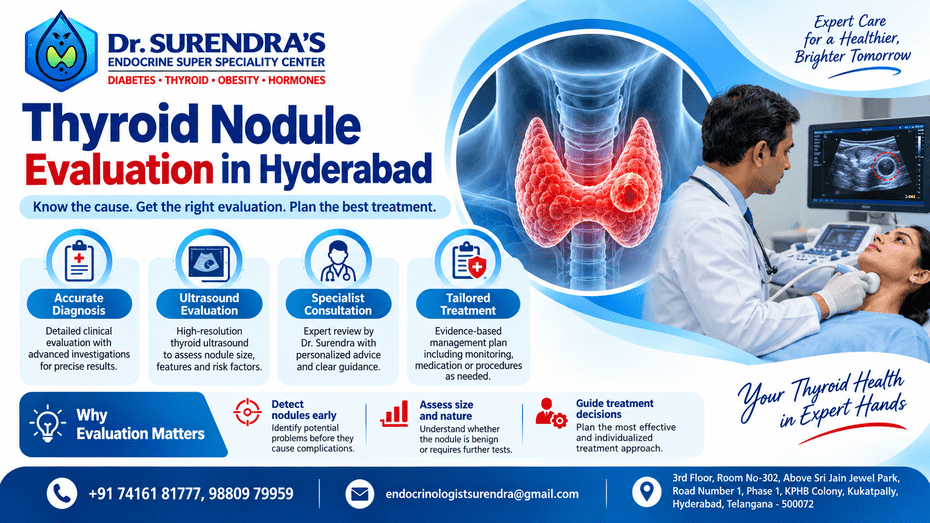
High-resolution thyroid ultrasonography and specialist evaluation to assess nodule dimensions, internal architecture, and TIRADS risk category in KPHB Kukatpally.
Fine Needle Aspiration Cytology (FNAC)
Because ultrasound visualization ensures exact tip placement within the suspicious region while avoiding cystic fluid or blood vessels, diagnostic accuracy is exceptionally high. The entire procedure takes only 10 to 15 minutes, causes minimal discomfort, requires no hospital admission, and allows patients to resume normal daily activities immediately.
Cell samples are examined under a microscope by an experienced cytopathologist and reported according to the globally recognized Bethesda System for Reporting Thyroid Cytopathology. This standardized classification provides clear, evidence-based recommendations for subsequent clinical care.
- Bethesda I (Non-Diagnostic / Unsatisfactory): Inadequate cell count or obscuring blood; repeat ultrasound-guided FNAC is typically recommended
- Bethesda II (Benign): Accounts for 65% to 75% of all biopsies; risk of cancer is extremely low (0% to 3%); managed with routine surveillance without surgery
- Bethesda III (Atypia of Undetermined Significance - AUS / FLUS): Indeterminate cellular features; risk of malignancy is approximately 10% to 30%; repeat FNAC or molecular testing is advised
- Bethesda IV (Follicular Neoplasm / Suspicious for Follicular Neoplasm): Risk of malignancy is 25% to 40%; diagnostic surgical lobectomy is frequently considered
- Bethesda V (Suspicious for Malignancy): High likelihood of cancer (50% to 75%); surgical intervention is generally recommended
- Bethesda VI (Malignant): Confirmed malignancy (97% to 99% risk, most commonly papillary thyroid cancer); definitive surgical resection is planned
Additional Tests When Required
When serum TSH is suppressed below normal limits, an endocrinologist orders a Radionuclide Thyroid Scan (Thyroid Scintigraphy) using Technetium-99m pertechnetate or Radioactive Iodine (I-123). This scan evaluates whether the nodule is 'hot' (hyperfunctioning, capturing tracer avidly) or 'cold' (non-functioning, capturing little or no tracer). Because hot nodules are almost universally benign, FNAC is rarely required for them.
In patients with very large, long-standing goiters or retrosternal nodules extending below the collarbones into the upper chest (mediastinum), cross-sectional imaging such as non-contrast CT or MRI of the neck and chest provides precise anatomical mapping of tracheal narrowing and vascular relationships.
- Thyroid Scintigraphy (Radioisotope Scan): Distinguishes autonomous toxic nodules from non-functioning cold nodules in hyperthyroid patients
- Cross-Sectional Neck/Chest CT or MRI: Evaluates retrosternal goiter extension, tracheal luminal compression, and substernal airway anatomy
- Vocal Cord Laryngoscopy: Visual inspection of vocal fold mobility conducted before surgery or if the patient experiences voice hoarseness
- Molecular Genetic Testing: Evaluates specific gene mutations (such as BRAF, RAS, RET/PTC) in nodules with indeterminate Bethesda III/IV cytology
Does Every Thyroid Nodule Need a Biopsy?
International endocrine guidelines established by the American Thyroid Association (ATA) and the Endocrine Society of India explicitly advise against routine biopsy of small or ultrasound-benign nodules. Over-biopsying clinically insignificant nodules causes unnecessary patient anxiety, medical expense, and potential overtreatment of indolent micro-lesions that would never cause harm.
The decision to perform an FNAC is strictly governed by a combination of the nodule's ultrasound risk category (TI-RADS) and its maximum diameter. By following these rigorous criteria, Dr. Surendra ensures that only nodules with genuine clinical significance undergo biopsy.
- Purely Cystic Nodules: Almost 100% benign; biopsy is not recommended regardless of size unless therapeutic fluid drainage is needed for comfort
- Spongiform / Low-Risk Nodules (TR2/TR3): Biopsy is only considered if the nodule measures 2.0 to 2.5 cm or larger and exhibits progressive growth
- Moderately Suspicious Nodules (TR4): Biopsy is recommended when the maximum diameter reaches 1.5 cm or larger
- Highly Suspicious Nodules (TR5): Biopsy is indicated when the nodule measures 1.0 cm or larger
- Sub-centimeter Nodules (< 1.0 cm): Rarely biopsied even with suspicious features, unless abnormal cervical lymph nodes or extrathyroidal extension are present
Are Thyroid Nodules Cancerous?
Common benign causes of thyroid nodules include colloid adenomas, simple degenerative cysts, thyroiditis pseudonodules, and benign follicular adenomas. These non-cancerous conditions are safely managed with periodic surveillance or conservative medical therapy.
Even in the small percentage of cases (5% to 10%) where a thyroid nodule proves to be malignant, thyroid cancer is among the most treatable of all human malignancies. Differentiated thyroid carcinomas—predominantly Papillary Thyroid Carcinoma (PTC) and Follicular Thyroid Carcinoma (FTC)—are generally slow-growing and carry a 10-year overall survival rate exceeding 98% when diagnosed early and treated appropriately by a dedicated endocrine team.
- Over 90% to 95% of all thyroid nodules are non-malignant and pose no threat to life
- Benign etiologies include colloid goiter, fluid cysts, and Hashimoto's autoimmune nodules
- Malignant nodules are predominantly slow-progressing differentiated thyroid carcinomas
- Early diagnosis and specialist staging result in long-term survival rates exceeding 98% for differentiated thyroid cancers
- Comprehensive endocrine evaluation provides definitive clarification and eliminates uncertainty
What Treatment Is Available for Thyroid Nodules?
At Dr. Surendra’s Endocrine Super Speciality Center in KPHB Colony, Kukatpally, our clinical management philosophy emphasizes conservative, organ-preserving strategies whenever safe and appropriate. The vast majority of benign nodules require only structured periodic observation rather than medication or surgery.
When active treatment is warranted, therapeutic options fall into three well-defined medical categories: Regular Monitoring (Active Surveillance), Targeted Medication for Hormonal Dysfunction, and Surgery or Specialist Interventions.
- Active Surveillance: Routine periodic follow-up for asymptomatic benign nodules
- Medical Hormone Regulation: Correcting accompanying hypothyroidism or hyperthyroidism
- Cyst Aspiration: Simple, safe drainage of fluid-filled cysts causing localized discomfort
- Radioactive Iodine Ablation: Targeted therapy for autonomous hyperfunctioning 'hot' nodules
- Surgical Resection: Thyroid lobectomy or total thyroidectomy for confirmed or suspected malignancy, large compressive goiters, or severe airway obstruction
Regular Monitoring (Active Surveillance)
Monitoring involves scheduling a repeat high-resolution neck ultrasound and clinical examination initially at 6 to 12 months. During each visit, the endocrinologist compares previous and current imaging scans to assess nodule volume and architecture.
Significant growth is clinically defined as an increase of 20% or more in at least two nodule dimensions (with a minimum increase of 2 mm) or a 50% increase in total nodule volume. If a nodule remains completely stable over consecutive follow-up visits, the surveillance interval is safely extended to every 1 to 2 years.
- Baseline measurement comparison using standardized digital ultrasound imaging
- Initial repeat ultrasound recommended between 6 and 12 months based on TI-RADS classification
- Monitoring tracks nodule volume stability and rules out new high-risk ultrasound features
- Extended follow-up intervals of 18 to 24 months for nodules demonstrating documented stability
- Repeat FNAC is performed only if a nodule exhibits clinically significant growth or suspicious new features
Medication for Thyroid Dysfunction
If thyroid blood tests demonstrate an underactive thyroid gland (hypothyroidism with elevated TSH), treatment with Thyroid Disorders Treatment using levothyroxine restores normal circulating thyroxine levels. Normalizing TSH relieves fatigue and metabolic sluggishness while preventing elevated TSH from stimulating further thyroid gland hyperplasia.
Conversely, if an autonomous 'hot' nodule causes hyperthyroidism (suppressed TSH with elevated FT4/FT3), antithyroid medications such as carbimazole or methimazole and beta-blockers are prescribed to control heart palpitations, tremors, and metabolic hyperactivity prior to definitive therapy.
- Levothyroxine Therapy: Prescribed strictly to treat hypothyroidism and normalize pituitary TSH feedback
- Antithyroid Drugs (Carbimazole/Methimazole): Controls hormone overproduction in toxic autonomous nodules
- Beta-Blocker Support: Provides rapid relief from palpitations, tremors, and nervous anxiety in hyperthyroid states
- Crucial Safety Principle: Suppressive thyroid hormone doses should never be used to shrink benign nodules in patients with normal TSH, as this creates harmful risks of bone loss (osteoporosis) and cardiac arrhythmias
Surgery or Other Specialist Treatment
Depending on the nodule's location, size, and cytopathological diagnosis, surgery may involve a thyroid lobectomy (hemithyroidectomy, removing the affected lobe and isthmus while preserving the opposite healthy lobe) or a total thyroidectomy (complete removal of the thyroid gland).
In patients requiring total thyroidectomy or completion surgery for cancer, lifelong daily levothyroxine replacement therapy is initiated to maintain normal metabolic health, alongside periodic monitoring of serum thyroglobulin and neck ultrasound.
- Malignancy or High Suspicion: Confirmed Bethesda VI cancer or Bethesda V suspicious cytology
- Indeterminate Biopsy (Bethesda III or IV): When combined with high-risk ultrasound features, genetic mutations, or patient preference
- Compressive Mechanical Symptoms: Significant tracheal narrowing, breathing obstruction, choking sensations, or difficulty swallowing
- Substernal / Retrosternal Goiter: Extension of thyroid tissue into the thoracic cavity
- Progressive Cosmetic Disfigurement: Large, unsightly anterior neck swellings causing psychological or social distress
- Radioactive Iodine (I-131) Therapy: An effective non-surgical option for hyperfunctioning toxic adenomas or toxic multinodular goiters
When Should You Consult a Thyroid Nodule Specialist in Hyderabad?
While most nodules are benign, certain clinical warning signs demand expedited endocrine evaluation. Delaying medical consultation allows compressive symptoms or underlying disease to advance, whereas timely evaluation enables conservative, organ-preserving management.
Residents in Hyderabad, Kukatpally, KPHB, Miyapur, Nizampet, and Hitec City can easily Contact Dr. Surendra or Book a Thyroid Consultation to receive comprehensive clinical evaluation under Dr. Surendra Prasad Guntupalli.
- A newly discovered lump, fullness, or asymmetry at the front base of the neck
- An incidental finding of a thyroid nodule or multinodular goiter on an ultrasound, carotid scan, CT, or MRI report
- A neck nodule that is growing rapidly over weeks or months
- Difficulty swallowing, frequent choking, or persistent throat pressure
- Unexplained hoarseness, vocal changes, or a chronic tickling cough without respiratory infection
- An abnormal TSH blood report (either elevated or low) in the presence of a thyroid swelling
- Personal history of head/neck radiation or a family history of thyroid tumors or MEN syndrome
- EMERGENCY WARNING: Severe, sudden breathing difficulty or airway obstruction requires immediate emergency hospital care
Thyroid Nodule Evaluation in KPHB, Kukatpally, Hyderabad
Patients consulting at our clinic experience unhurried, patient-centered consultations where diagnostic findings, ultrasound scans, and treatment pathways are explained in clear, reassuring detail. Our center coordinates high-resolution neck ultrasonography, specialized thyroid laboratory panels, ultrasound-guided FNAC, and long-term surveillance protocols all within our specialized center.
Conveniently located on Road No. 1, Phase 1, KPHB Colony, our clinic is easily accessible by road and metro for families across Kukatpally, KPHB, Miyapur, Nizampet, Bachupally, JNTU, Kondapur, and Greater Hyderabad. Connect with our official YouTube and Instagram channels for regular educational videos on endocrine wellness, or reach out to our clinic desk directly to plan your visit.
- Super-Specialist DM Endocrinology Qualification: Advanced clinical fellowship in hormone disorders, thyroid tumors, and metabolic health
- Evidence-Based TIRADS Risk Stratification: Avoiding unnecessary biopsies through precise ultrasound criteria
- Patient-Centered Compassionate Care: Clear explanations, empathetic listening, and personalized management plans
- Clinic Address: 3rd Floor, Room No-302, Above Sri Jain Jewel Park, Road Number 1, Phase 1, KPHB Colony, Kukatpally, Hyderabad, Telangana - 500072
- Consultation Timings: Monday to Saturday: 10:00 AM – 2:00 PM & 5:00 PM – 8:30 PM
- Contact Numbers: +91 74161 81777 / +91 98809 79959
- Clinic Amenities: Fully functional modern elevator access, comfortable air-conditioned waiting lounge, and organized appointment desk
Medical Education Disclaimer
This article is for patient education only and does not replace a physical consultation with a qualified doctor. Hormone regimens, blood sugar targets, and thyroid medications must be individually calibrated by an endocrinologist after proper laboratory diagnostic evaluation.
Medical References & Clinical Guidelines
- Endocrine Society of India (ESI) Clinical Practice Guidelines and Consensus Statement on the Management of Thyroid Nodules.
- American Thyroid Association (ATA) Guidelines for Adult Patients with Thyroid Nodules and Differentiated Thyroid Cancer
- American Association of Clinical Endocrinology (AACE) / ACE / AME Medical Guidelines for Clinical Practice for the Diagnosis and Management of Thyroid Nodules
- National Institute of Diabetes and Digestive and Kidney Diseases (NIDDK) – Thyroid Nodules Overview
Frequently Asked Questions
You should consult an Endocrinologist, a medical super-specialist holding a DM or DNB in Endocrinology. Endocrinologists specialize specifically in hormone-producing glands, thyroid ultrasound interpretation, TIRADS risk stratification, FNAC biopsy indications, and non-surgical management. Dr. Surendra Prasad Guntupalli at Dr. Surendra's Endocrine Super Speciality Center in KPHB, Kukatpally, provides specialized clinical evaluation for thyroid nodules, goiter, and hormone balance.
Need Specialist Thyroid Advice?
Consult Dr. Surendra Prasad Guntupalli for thyroid nodule assessment, abnormal TSH, thyroid swelling and endocrine evaluation in KPHB, Kukatpally.